When Disaster Hits, This Is How I Keep My Money Safe
Natural disasters can strike without warning, turning lives upside down in moments. When floods, earthquakes, or hurricanes hit, most people think about safety first — and they should. But I learned the hard way that if you don’t protect your finances early, the recovery takes years. After going through a major storm that wiped out local banks and ATMs, I realized how fragile our financial systems really are. That’s when I started building a real plan — not for profit, but for protection. Here’s what actually works when the world goes sideways.
The Wake-Up Call: Why Natural Disasters Are Financial Emergencies Too
Natural disasters are often measured in wind speed, flood levels, or structural damage, but their financial toll can be just as devastating — and far longer lasting. When emergency sirens wail, families rush to secure their homes and loved ones, which is right and necessary. Yet, few consider that in the aftermath, the ability to access money may vanish just when it’s needed most. Power outages disable digital banking. Damaged infrastructure cuts off access to ATMs and branches. In some cases, entire financial networks go dark for days or even weeks. Without liquid funds, even insured households face delays in repairs, medical care, or relocation — turning a temporary crisis into a prolonged hardship.
Consider what happened during Hurricane Maria in Puerto Rico. After the storm made landfall in 2017, the island’s power grid collapsed. Banks remained closed for weeks. ATMs ran out of cash within days. Residents who relied solely on cards or mobile payments found themselves unable to buy food, fuel, or medicine — even if they had money in the bank. Similarly, during the 2011 floods in Thailand, many small business owners lost not only their shops but also their ability to process transactions. Digital systems were down, and cash reserves were insufficient. Recovery stalled not because people lacked wealth, but because they lacked access to it. These events reveal a critical truth: financial resilience is not just about how much you have, but how reliably you can use it when normal systems fail.
The lesson here is not to fear disaster, but to prepare for its ripple effects. Insurance can replace a roof, but it won’t pay for a hotel tonight. Government aid arrives eventually, but not instantly. The gap between disaster and recovery is where personal financial preparedness matters most. This is why asset protection must be woven into emergency planning from the start. It’s not about hoarding or pessimism — it’s about ensuring that when the ground shakes or the water rises, your ability to respond isn’t crippled by financial paralysis. Treating money as part of survival planning shifts the mindset from passive hope to active readiness.
Cash Is Still King — But Only If You Have It Beforehand
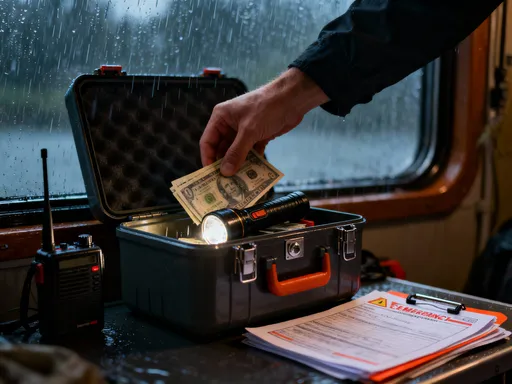
When the lights go out, digital money often becomes useless. Credit cards won’t swipe. Mobile wallets won’t connect. Even if your bank account is full, none of it matters if you can’t access it. That’s why physical cash remains one of the most reliable tools in a crisis. It doesn’t need a signal. It doesn’t require electricity. It works in the dark. But its power lies not in theory — it lies in preparation. Having cash on hand after a disaster is too late. You must have it before the storm hits.
Experts recommend keeping a designated emergency cash reserve, separate from everyday spending money. A common guideline is to set aside between $200 and $500 per person in a household, stored in small and medium denominations. Bills like $1s, $5s, $10s, and $20s are more practical than $50s or $100s, which are hard to break when merchants also have limited change. This reserve should be kept in a secure but easily accessible location — not in a bank account, not in a wallet, but in a place you can reach quickly if you need to evacuate. A fireproof and waterproof safe at home is ideal, but a hidden, dry container works if a safe isn’t available.
Yet, cash alone isn’t enough — it must be managed wisely. Paper money deteriorates over time, especially in humid or damp environments. Mold, tears, and fading can make bills unusable. To prevent this, it’s wise to rotate your emergency cash every six to twelve months. Take it out, inspect it, replace damaged bills, and put fresh ones back. This also gives you a chance to adjust the amount based on inflation or changes in family size. Another often-overlooked risk is storing cash in unsafe places — under a mattress, in a dresser drawer, or inside a freezer. These spots may seem clever, but they’re vulnerable to fire, water, or theft. A better approach is to use a dedicated emergency cash kit: a small, labeled pouch or envelope that includes not only money but also a list of its contents and the date it was last updated.
Some worry that keeping cash at home is unsafe or unwise in a digital age. But the goal isn’t to replace banking — it’s to complement it. Think of emergency cash as a financial seatbelt. You don’t wear it every day, but you’re glad it’s there when the unexpected happens. In a disaster, cash isn’t just currency — it’s mobility, dignity, and control. It allows you to make choices when systems are broken. That’s why the real question isn’t whether you should keep cash, but whether you can afford not to.
Protecting Digital Assets: Beyond the Bank App
Today, most of our wealth exists in digital form — bank balances, investment accounts, insurance policies, and even identification. We access them through smartphones, apps, and online portals, all of which depend on electricity, internet, and working devices. When a disaster strikes and these systems fail, our financial lives can freeze. A phone dies. A network goes down. A cloud account becomes unreachable. Suddenly, proof of ownership, access to savings, or the ability to transfer funds disappears — not because the money is gone, but because the pathway to it is blocked.
This vulnerability became clear during the 2018 California wildfires, where entire neighborhoods were evacuated with little notice. Residents fled with phones and documents, but many lost access to their digital accounts as cell towers went offline and charging stations became scarce. Without a way to verify identity or authorize transactions, some were unable to access emergency funds or pay for temporary housing. Even those with online backups found themselves stuck when two-factor authentication required a text message they couldn’t receive. The takeaway is simple: digital convenience comes with a hidden cost — dependence on infrastructure that can fail when you need it most.
So how do you protect digital assets when the digital world is at risk? The answer lies in redundancy. First, create offline backups of essential financial documents. This includes account numbers, insurance policies, property deeds, and identification cards. Store them on an encrypted USB drive or external hard drive, kept in your emergency kit or a safe location outside the home, like a trusted relative’s house. Make sure the drive is password-protected and updated regularly. Second, use multi-factor authentication methods that don’t rely solely on cell service. For example, choose authentication apps that generate codes offline, or keep backup codes printed and stored securely. Avoid relying only on SMS-based verification, which fails when networks are down.
Another layer of protection is decentralized storage. Instead of trusting everything to one cloud provider, use multiple platforms — for example, one for documents, another for photos, and a third for financial records. This reduces the risk of total data loss. Additionally, consider using password managers with offline access, so you’re not locked out of accounts if you can’t log in to your master vault. The goal isn’t to abandon digital tools — they’re too valuable — but to ensure they don’t become single points of failure. When your phone dies and the Wi-Fi is out, having a backup plan means the difference between helplessness and action.
Diversifying Where Your Money Lives
Putting all your money in one bank is like storing all your emergency supplies in one closet — efficient until that closet burns down. Financial diversification isn’t just about investment returns; it’s about access resilience. When a natural disaster hits, local bank branches may close, ATMs may run dry, and regional networks may go offline. If all your accounts are tied to one institution or location, you could lose access to everything at once. Spreading your funds across multiple banks and account types reduces that risk and increases your ability to respond quickly.
A practical approach is to divide your liquid savings between at least two financial institutions — ideally, one local and one national. The local bank may offer personalized service and easier in-person access under normal conditions, but a national bank with a broader branch and ATM network can provide alternatives when local infrastructure is compromised. For example, if a hurricane knocks out power in your city, a national bank with operations in neighboring states may still allow withdrawals or transfers through its system. Similarly, having accounts in different cities or regions — even if only for a portion of your savings — can provide access points outside the disaster zone.
It’s also wise to consider non-digital forms of value that don’t depend on banking systems. While precious metals like gold or silver are not everyday currency, they can serve as long-term stores of value in extreme scenarios. The key is to hold them responsibly — not as speculative investments, but as part of a balanced emergency reserve. Small, certified coins or bars stored securely can be exchanged in certain markets if cash becomes scarce. More accessible options include prepaid debit cards loaded with funds and kept in your emergency kit. These can be used like cash and reloaded when systems are back online. The goal isn’t to predict economic collapse, but to ensure you have options when normal channels fail.
Diversification also applies to account types. In addition to checking and savings accounts, consider having a money market account or credit union account, which may operate on different networks. Some credit unions, for instance, are part of shared branching networks, allowing members to access services at other participating institutions. This kind of structural redundancy increases your flexibility. The core principle is simple: resilience comes from having multiple ways to access your money, not from maximizing returns. In a crisis, access matters more than yield. A dollar you can use is worth far more than a dollar you can’t reach.
Emergency Documents: The Invisible Lifeline
When disaster strikes, the loss of physical documents can be as damaging as the loss of property. Without identification, insurance policies, or property deeds, rebuilding becomes a bureaucratic nightmare. You may have money in the bank, but proving who you are or what you own can take weeks or months. Delays in claims processing, loan approvals, or government assistance often stem not from lack of funds, but from lack of paperwork. That’s why a secure, portable document system is one of the most powerful tools in financial preparedness.
The first step is to identify what documents matter most. These typically include government-issued IDs, Social Security cards, birth certificates, marriage licenses, property deeds, mortgage statements, insurance policies, wills, and medical directives. Make both digital and physical copies. For digital copies, scan each document and store them in an encrypted cloud storage service with strong passwords and two-factor authentication. Use a provider known for reliability and security, and ensure you can access the files from multiple devices. Label folders clearly — for example, “Emergency_Documents_2024” — so you can find them quickly under stress.
For physical copies, print duplicates and store them in a waterproof and fireproof container. A small home safe works, or a sealed plastic binder stored in a high, dry location. It’s also smart to give copies to a trusted family member or friend who lives outside your immediate area. This creates a remote backup in case your home is damaged. Some people use safety deposit boxes at banks, but this can be risky — if the bank is closed or inaccessible, so are your documents. A better option is a secure location at a relative’s house or in your emergency go-bag if you’re evacuating.
Organization is key. Create a checklist of all essential documents and review it every six months. Update it when life changes occur — a new insurance policy, a home purchase, a change of address. Include contact information for your bank, insurer, and financial advisor. The goal is to have everything in one place, ready to go. When time is short and stress is high, a well-organized document system saves energy, reduces confusion, and speeds up recovery. In the aftermath of disaster, information is currency. Those who have it can act. Those who don’t must wait.
Communication Breakdown — And How to Stay Financially Connected
When phone lines go down and the internet fails, communication becomes one of the first casualties of disaster. No signal means no access to bank apps, no way to confirm transactions, and no ability to coordinate with family or financial institutions. Yet, financial decisions often require communication — to authorize payments, verify identity, or update beneficiaries. Without it, even simple tasks can become impossible. Planning for communication failure is not just about staying in touch — it’s about maintaining financial control when systems are disrupted.
Low-tech solutions are often the most reliable. An emergency radio with a hand crank or solar charger can provide weather updates and public service announcements, including information about bank openings or aid distribution. Satellite messengers, though more expensive, allow text communication without cell service and can be lifesavers in remote or severely affected areas. Even a simple list of emergency contacts, written on paper and kept in your wallet, ensures you can reach someone if your phone is dead. The key is to have options that don’t depend on infrastructure.
Equally important is establishing financial authorization protocols in advance. Designate a trusted family member or friend as a financial contact who can act on your behalf if you’re unreachable. This doesn’t mean giving them full control — it means setting up legal tools like a durable power of attorney or joint accounts with limited access. Make sure the person understands your wishes and has copies of necessary documents. Discuss scenarios in advance: What should they do if your home is damaged? How should they handle insurance claims? Having these conversations before disaster strikes removes guesswork and prevents delays.
Another strategy is to pre-arrange access codes or security questions with your bank. Some institutions allow you to register emergency contacts who can verify your identity over the phone. While privacy is important, a balance must be struck between security and accessibility. The goal isn’t to expose your accounts, but to ensure they remain usable when you’re offline. In a crisis, being too secure can be as dangerous as being too exposed. Planning for communication failure means building bridges now, so they’re there when the storm hits.
Building a Real Plan: From Theory to Daily Practice
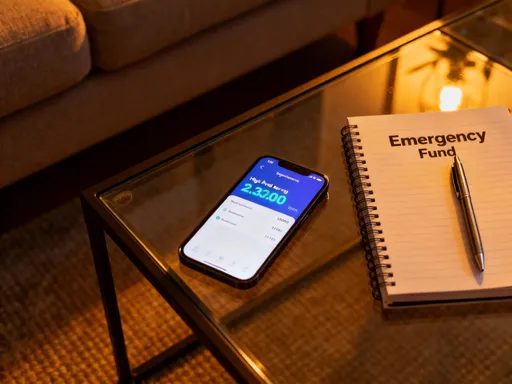
Knowledge is only powerful when it leads to action. Reading about financial preparedness won’t protect you — doing something will. The final step is to turn these ideas into a personal plan that fits your life, your risks, and your resources. Start small. Set a goal to complete one task this week: gather your essential documents, open a second bank account, or set aside $100 in emergency cash. These actions don’t require large sums or drastic changes — they require consistency.
Create a timeline. In the next 30 days, finish organizing your digital and physical documents. Store them securely and share copies with a trusted contact. Within 60 days, review your bank access points and consider diversifying your accounts. Open a new account if it makes sense, or load a prepaid card as a backup. By 90 days, test your plan. Try accessing your emergency cash. Check your USB drive. Call your bank to confirm your emergency contact is on file. These small tests reveal gaps before they become problems.
Build habits, not just checklists. Update your documents every quarter. Rotate your cash twice a year. Review your financial contacts annually. Treat financial preparedness like any other routine maintenance — not as a one-time project, but as an ongoing practice. The mindset shift is crucial: this isn’t about fear, but about freedom. When you know your finances are protected, you face disasters with more confidence and less anxiety.
Ultimately, asset preservation isn’t about getting rich. It’s about staying whole. It’s about ensuring that when the world goes sideways, you don’t lose yourself in the chaos. By planning now, you give your future self a chance to recover, rebuild, and move forward — not from scratch, but from a foundation of readiness. That’s not just smart money management. It’s peace of mind.